




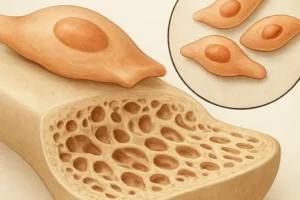


Space missions subject astronauts to prolonged periods of weightlessness, triggering profound changes in skeletal health. Bone density loss remains one of the most critical challenges in long-duration spaceflight, affecting crew safety, mission success, and post-flight recovery. This article explores the mechanisms underlying skeletal degeneration in microgravity, evaluates current countermeasures and treatments, and examines cutting-edge research aimed at preserving bone integrity beyond Earth’s atmosphere.
Causes of Bone Density Loss in Microgravity
When humans enter a microgravity environment, the skeletal system experiences dramatically reduced mechanical stimuli. Under Earth’s gravity, bones are continuously subjected to weight-bearing forces that stimulate cellular processes known as bone remodeling. In space, the absence of consistent mechanical loading disrupts this delicate balance, leading to accelerated bone resorption.
Altered Cellular Activity
- Osteoclast Overactivity: In microgravity, osteoclasts—the cells that break down bone—become hyperactive, increasing bone resorption rates by up to 2% per month.
- Osteoblast Suppression: Osteoblasts, responsible for bone formation, show reduced proliferation and activity, limiting the skeleton’s ability to rebuild lost tissue.
- Disturbed Signaling Pathways: Key molecular pathways involving Wnt/β-catenin and RANK/RANKL/OPG become dysregulated, impairing the coordination between bone resorption and formation.
Mechanical Unloading
Long-duration missions expose astronauts to near-zero gravitational force, eliminating the habitual stresses that bones require to maintain strength. The absence of loading leads to:
- Atrophy of Trabecular Bone: Spongy bone within the vertebrae and hip experiences rapid thinning, elevating fracture risk.
- Cortical Bone Thinning: The dense outer layer of long bones loses mineral content, reducing stiffness and resilience.
- Altered Muscle–Bone Interaction: Muscle atrophy further exacerbates skeletal decline by diminishing the mechanical impulses transmitted to bone tissue.
Countermeasures and Treatments
Combating space-induced osteoporosis requires a multifaceted approach that combines physical, nutritional, and pharmacological strategies. Effective countermeasures aim to mimic gravitational forces, enhance cellular health, and modulate biochemical pathways to preserve bone mass.
Exercise Protocols
Resistance training remains the cornerstone of skeletal maintenance during flight. The Advanced Resistive Exercise Device (ARED) onboard the International Space Station (ISS) allows crewmembers to perform high-load squats, deadlifts, and heel raises. Key features include:
- Variable Resistance: Flywheel or vacuum cylinder systems deliver loads up to 600 pounds, approximating Earth-like forces.
- Multi-Planar Movements: Exercises target axial loading on hips, spine, and lower limbs to stimulate both cortical and trabecular bone.
- Regular Schedules: Astronauts typically engage in resistance sessions 5–6 days per week, complemented by cardiovascular workouts.
Nutritional Strategies
Optimal nutrition plays a pivotal role in skeletal health. Dietary countermeasures focus on:
- Calcium and Vitamin D Supplementation: Ensuring adequate intake supports mineralization and regulates calcium homeostasis.
- Protein-Rich Diets: High-quality proteins supply essential amino acids for osteoblast function and muscle preservation.
- Omega-3 Fatty Acids: Anti-inflammatory properties may reduce osteoclast activity and promote a favorable bone turnover ratio.
Pharmaceutical Therapies
Several medications originally developed for terrestrial osteoporosis are under evaluation for spaceflight use:
- Bisphosphonates: Agents like alendronate inhibit osteoclast-mediated bone resorption and have demonstrated up to 1.5% reduction in monthly bone loss.
- Denosumab: A monoclonal antibody targeting RANKL, it offers a reversible suppression of bone turnover without long-term accumulation.
- Teriparatide: Recombinant parathyroid hormone analog promotes osteoblast activity, potentially accelerating bone formation post-flight.
Research Frontiers and Future Directions
Ongoing research strives to develop innovative technologies and therapies to safeguard skeletal health on missions to the Moon, Mars, and beyond. Interdisciplinary collaborations between biomechanics, molecular biology, and engineering aim to identify novel targets and create next-generation countermeasures.
Mechanical Stimulators
Vibration platforms and pneumatic actuators are under investigation as adjuncts to exercise regimens:
- Low-Intensity Vibration (LIV): High-frequency, low-magnitude oscillations stimulate osteoblast proliferation without significant muscle fatigue.
- Pneumatic Bone Loading Devices: Wearable sleeves deliver pulsatile pressure cycles to limbs, mimicking ground reaction forces.
Cellular and Genetic Approaches
Advances in bone remodeling research target the genetic and epigenetic regulators of skeletal turnover:
- Gene Therapy: Viral vectors aim to enhance expression of anabolic factors like IGF-1 within osteoblasts.
- CRISPR/Cas9 Applications: Precise editing of key signaling molecules may confer resistance to microgravity-induced bone loss.
- Stem Cell Therapies: Mesenchymal stem cell transplantation holds promise for regenerating bone tissue after prolonged unloading.
Integrated Monitoring Systems
Real-time assessment of bone health is critical for personalized countermeasure optimization:
- Ultrasound Bone Densitometry: Portable devices enable in-flight measurements of cortical thickness and echogenicity.
- Biomarker Panels: Blood and urine assays track turnover markers such as CTX, P1NP, and sclerostin, guiding therapeutic adjustments.
- AI-Driven Analytics: Machine learning algorithms integrate biomechanical data, exercise logs, and dietary records to predict individual risk profiles.
Post-Flight Rehabilitation and Beyond
After returning to Earth, astronauts undergo structured rehabilitation to restore musculoskeletal integrity. Interventions include:
- Gradual Reintroduction of Load: Progressive weight-bearing exercises rebuild bone strength while minimizing fracture risk.
- Targeted Physiotherapy: Balance training and proprioceptive drills improve neuromuscular coordination and reduce fall incidence.
- Long-Term Monitoring: Dual-energy X-ray absorptiometry scans and serum biomarker evaluations track recovery trajectories over months to years.
As humanity prepares for extended missions to deep space, preserving skeletal health remains paramount. By integrating advanced exercise modalities, optimized nutrition, pharmaceutical innovations, and cutting-edge research, the next generation of explorers can look forward to stronger, healthier bones during and after their cosmic journeys.