



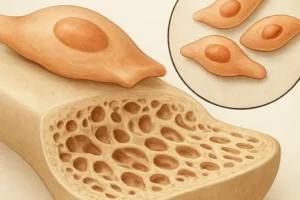


The bone marrow serves as a dynamic organ where hematopoiesis unfolds in concert with the immune system, generating a constant supply of blood cells while regulating inflammatory and defensive responses. This article explores key aspects of bone marrow biology, focusing on the interactions between its stromal components and developing immune cells. By examining the microenvironment, regulatory pathways, and clinical implications, we gain insights into novel therapeutic strategies for immune modulation and bone marrow disorders.
Bone Marrow Microenvironment and Cellular Architecture
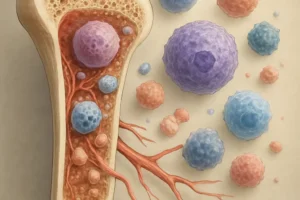
Within the rigid confines of the marrow cavity, a complex network of cells and extracellular matrix creates specialized niches that support stem cell maintenance and differentiation. The stroma, composed of mesenchymal stromal cells, osteoblasts, endothelial cells, and perivascular cells, produces an array of cytokines and growth factors. These molecular signals orchestrate the fate and function of hematopoietic stem cells (HSCs), ensuring a balanced output of erythrocytes, platelets, and leukocytes.
Niche Components and Functions
- Osteoblastic niche: Osteoblasts line the endosteal surface and secrete factors such as osteopontin and angiopoietin-1, promoting HSC quiescence.
- Vascular niche: Endothelial cells and pericytes create sinusoids through which maturing blood cells enter the circulation. They release stem cell factor (SCF) to support proliferation.
- Reticular cells: Nestin-positive mesenchymal cells produce CXCL12, a chemokine critical for HSC retention and homing.
- Macrophage networks: Specialized macrophages phagocytose apoptotic cells and contribute to erythroid island formation, enhancing red cell differentiation.
Extracellular Matrix and Biomechanical Signals
The bone marrow extracellular matrix (ECM) provides structural cues and binds growth factors, creating gradients that influence cell migration. Matrix stiffness and composition regulate differentiation pathways; for example, higher rigidity can skew HSCs toward myeloid lineages, whereas softer regions favor lymphopoiesis.
Immune Cell Development and Regulatory Mechanisms
The interplay between stromal cells and progenitor populations determines the trajectory of immune cell development. From common lymphoid progenitors to mature T and B lymphocytes, intricate signaling events govern survival, proliferation, and selection processes that prevent autoimmunity while enabling effective host defense.
Myelopoiesis Versus Lymphopoiesis
- Myeloid lineage: Under the influence of granulocyte-macrophage colony-stimulating factor (GM-CSF) and interleukin-3 (IL-3), progenitors differentiate into neutrophils, eosinophils, basophils, monocytes, and macrophages. These cells are frontline defenders against bacterial and fungal pathogens.
- Lymphoid lineage: Signals such as FLT3 ligand and Interleukin-7 (IL-7) guide the commitment toward B cells, T cells, and innate lymphoid cells. The thymus plays a pivotal role in T cell maturation, but early T cell precursors originate in the marrow.
Regulation by Cytokines and Metabolic Cues
Cytokine gradients within the marrow microenvironment fine-tune lineage decisions. Additionally, metabolic pathways—such as glycolysis and fatty acid oxidation—impact HSC fate, influencing whether a cell remains quiescent or enters the cell cycle. Hypoxic niches maintain HSC dormancy via HIF-1α signaling, reducing oxidative stress and preserving long-term self-renewal.
Clinical Implications and Emerging Therapies
Disruptions in bone marrow homeostasis contribute to diseases ranging from aplastic anemia to leukemia. Understanding the interplay between stromal elements and immune cells has paved the way for innovative interventions, including cell-based therapies and targeted molecular agents.
Bone Marrow Transplantation and Engraftment
Allogeneic and autologous bone marrow transplantation remains a cornerstone for treating hematologic malignancies and inherited disorders. Successful engraftment depends on conditioning regimens, graft composition, and the recipient’s stromal environment. Recent approaches aim to enhance niche receptivity by modulating inflammation and administering niche-supportive factors.
Targeting Stromal-Immune Interactions
- CXCL12/CXCR4 antagonists: By disrupting the retention signals, these agents mobilize HSCs into peripheral blood for collection or diminish malignant cell reservoirs in the marrow.
- Checkpoint inhibitors: Immune modulators originally developed for solid tumors show promise in reactivating marrow-resident T cells against leukemic blasts.
- Mesenchymal stromal cell therapy: Infusions of ex vivo expanded stromal cells aim to repair damaged niches and support hematopoietic recovery in graft-versus-host disease.
Future Directions in Immuno-Bone Research
Ongoing studies explore gene editing of HSCs to correct inherited defects and the design of synthetic niches using biomaterials. Advances in single-cell sequencing reveal previously unrecognized stromal subsets and their roles in disease progression. Harnessing these insights may lead to targeted cures for a spectrum of bone marrow disorders and immune deficiencies.
Appreciating the synergy between bone marrow architecture and immune cell function opens new paths for clinical innovation. As researchers decipher the molecular dialogues within this vital organ, the prospect of precise, niche-directed therapies becomes increasingly attainable, offering hope to patients with otherwise intractable diseases.