



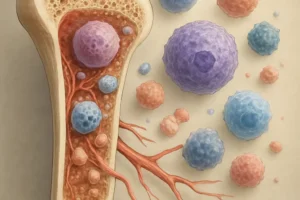

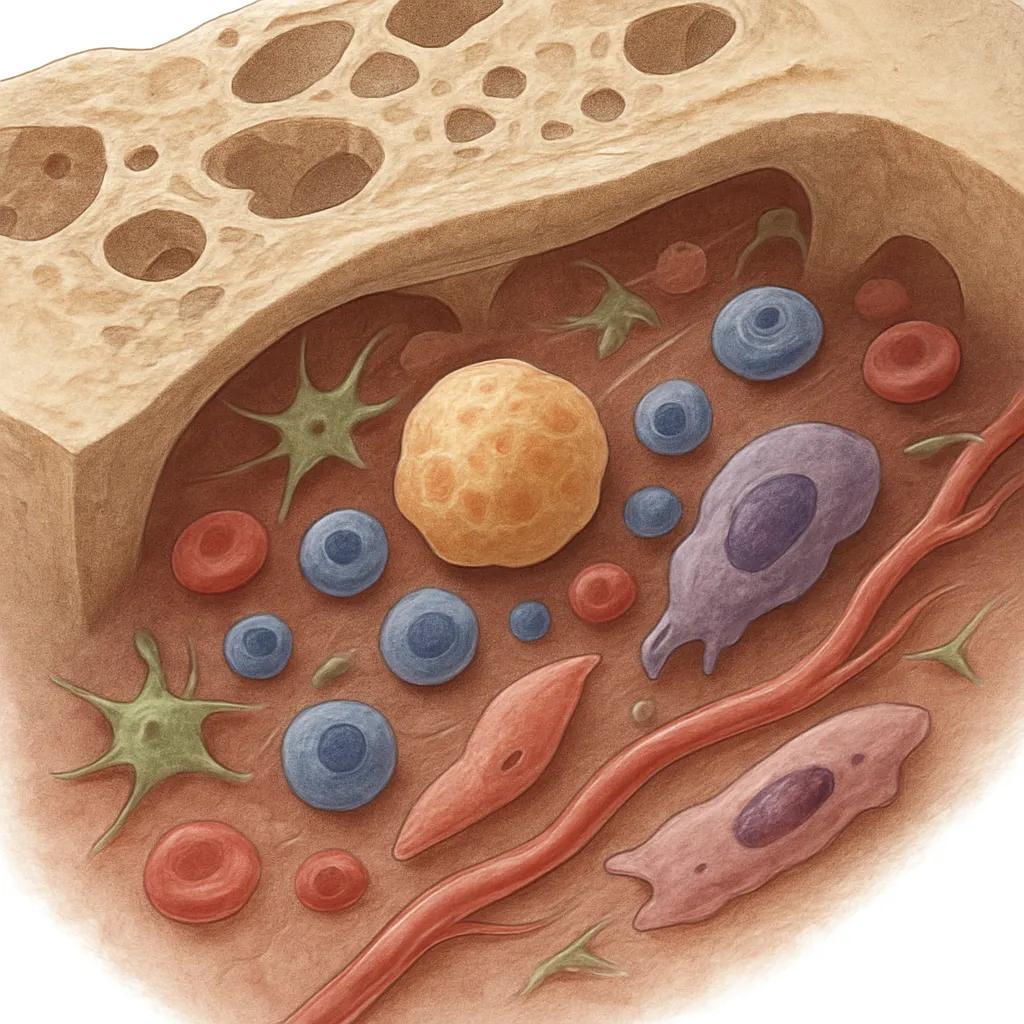
The bone marrow serves as a critical site for blood cell production and immune regulation. Within this confined space, the complex interplay of cellular and molecular signals establishes a specialized niche that maintains lifelong blood homeostasis. Understanding the structural organization and functional dynamics of this environment reveals insights into normal physiology and offers therapeutic avenues for hematological disorders.
Anatomical Organization of the Bone Marrow Niche
Endosteal Niche
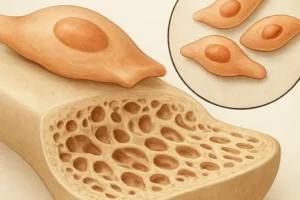
Located adjacent to the inner surface of cortical bone, the endosteal niche provides a quiescent environment for long-term stem cells. Osteoblastic lineage cells interact directly with hematopoietic elements, anchoring progenitors through adhesive molecules and regulating their cell cycle status. The rigid bone matrix imparts mechanical cues that influence fate decisions via integrin-mediated signaling pathways.
Vascular Niche
Interstitial sinusoids form a vast network within the marrow cavity, facilitating the transit of mature blood cells into circulation. Endothelial cells contribute to angiogenesis, secreting growth factors such as vascular endothelial growth factor (VEGF). These vessels create a gradient of oxygen and nutrients that tune the balance between HSC dormancy and activation.
Perivascular and Reticular Components
Perivascular stromal cells, including specialized reticular cells, produce a scaffold enriched in extracellular matrix proteins. This scaffold, together with adipocytes and nerve fibers, generates a richly textured microenvironment. The interplay between these elements governs spatial organization, ensuring that HSCs receive precise cues for self-renewal or differentiation.
Functional Components and Cellular Interactions
Hematopoietic Stem Cell Maintenance
HSCs reside in a delicate equilibrium where retention, proliferation, and differentiation must be tightly regulated. Adhesion molecules such as N-cadherin and vascular cell adhesion molecule-1 (VCAM-1) anchor cells to their niche partners. This cell-cell contact preserves genomic integrity by limiting exposure to replication stress and promotes long-term repopulating activity.
Role of Stromal Cells
Mesenchymal stromal cells (mesenchymal stem cells) support hematopoiesis through direct interactions and paracrine signaling. They secrete a spectrum of cytokines and chemokines— including CXCL12—that guide HSC trafficking and homing. Additionally, stromal elements can differentiate into osteoblasts, adipocytes, and chondrocytes, modulating the composition of the niche according to physiological demands.
Influence of Cytokines and Chemokines
Cytokine gradients establish functional zoning within the marrow. Key factors such as stem cell factor (SCF), interleukin-7 (IL-7), and thrombopoietin (TPO) coordinate lineage commitment and proliferation. The chemokine CXCL12, also known as SDF-1, is essential for retaining HSCs near supportive cells and preventing premature egress. Disruption of these signals can lead to cytopenias or uncontrolled proliferation.
Clinical Implications and Therapeutic Perspectives
Bone Marrow Transplantation
Allogeneic and autologous transplantation relies on efficient engraftment of donor HSCs. Preconditioning regimens disrupt host niches to make space for incoming cells, while supportive therapies aim to enhance niche receptivity. Advances in mobilization techniques use G-CSF and CXCR4 antagonists to harvest sufficient HSCs for transplantation, minimizing donor morbidity.
Targeting the Niche in Cancer
Malignant cells can hijack the normal regulatory circuits of the bone marrow. Leukemia stem cells exploit niche signals to evade chemotherapy and establish minimal residual disease. Strategies to disrupt tumor-niche interactions involve blocking adhesion molecules, neutralizing supportive cytokines, or remodeling the extracellular matrix. These approaches aim to sensitize cancer cells and prevent relapse.
Regenerative Medicine and Bioengineering
Biomimetic scaffolds and organoid systems recreate niche-like conditions ex vivo. By embedding HSCs in hydrogel matrices enriched with key growth factors, researchers can expand functional blood-forming cells for therapeutic use. Tissue engineering also explores three-dimensional constructs combining osteoblasts, endothelial networks, and stromal elements to simulate a functional marrow microarchitecture.
Advanced Research Techniques and Future Directions
Imaging and Single-Cell Analysis
High-resolution microscopy and intravital imaging illuminate cellular dynamics within the intact marrow. Coupled with single-cell RNA sequencing, these methods reveal heterogeneity among stromal populations and unravel lineage trajectories during hematopoiesis. Computational modeling integrates these data to predict how perturbations alter niche function.
Gene Editing and Cellular Engineering
CRISPR/Cas9 technology enables precise modification of HSCs and niche cells to correct genetic defects or enhance therapeutic properties. Engineered cells expressing homing receptors or anti-apoptotic factors demonstrate improved engraftment and survival. Efforts to introduce synthetic regulatory circuits aim to provide external control over cell fate decisions.
Immunomodulation Within the Niche
Immune cells, including macrophages, T cells, and regulatory T cells, shape the bone marrow microenvironment. Macrophages clear apoptotic cells and secrete factors that influence stromal remodeling. Regulatory T cells maintain tolerance and can suppress aberrant inflammation. Understanding these interactions opens avenues for treating autoimmune cytopenias and improving transplant outcomes.
Emerging Therapeutic Targets
- Inhibitors of CXCL12/CXCR4 axis to modulate HSC mobilization
- Monoclonal antibodies against integrins to disrupt leukemic cell adhesion
- Small molecules enhancing niche repair in radiation-induced marrow failure
- Peptide-based agonists of TPO for thrombopoiesis support
- Nanoparticle delivery of gene-editing components directly to the niche
Integration of Bone Marrow Research into Clinical Practice
Personalized Niche Profiling
Advances in proteomics and metabolomics facilitate the characterization of individual marrow microenvironments. Patients with specific niche abnormalities may benefit from tailored therapies that correct local deficits. For example, enhancing osteoblastic function can ameliorate bone loss and support progenitors in cases of aplastic anemia.
Translational Challenges and Opportunities
Bridging the gap between bench and bedside requires standardized assays to evaluate niche function. Biomarkers of niche health, such as soluble adhesion molecules or cytokine panels, may predict treatment responses. Collaborative efforts between clinicians, biologists, and engineers aim to develop robust protocols for niche-targeted interventions.
Education and Collaborative Networks
Establishing interdisciplinary networks fosters the exchange of methodologies and clinical experiences. Training programs that integrate stem cell biology, bioengineering, and hematology will equip the next generation of researchers to innovate niche-based therapies. Public-private partnerships can accelerate the translation of promising discoveries into approved treatments.