



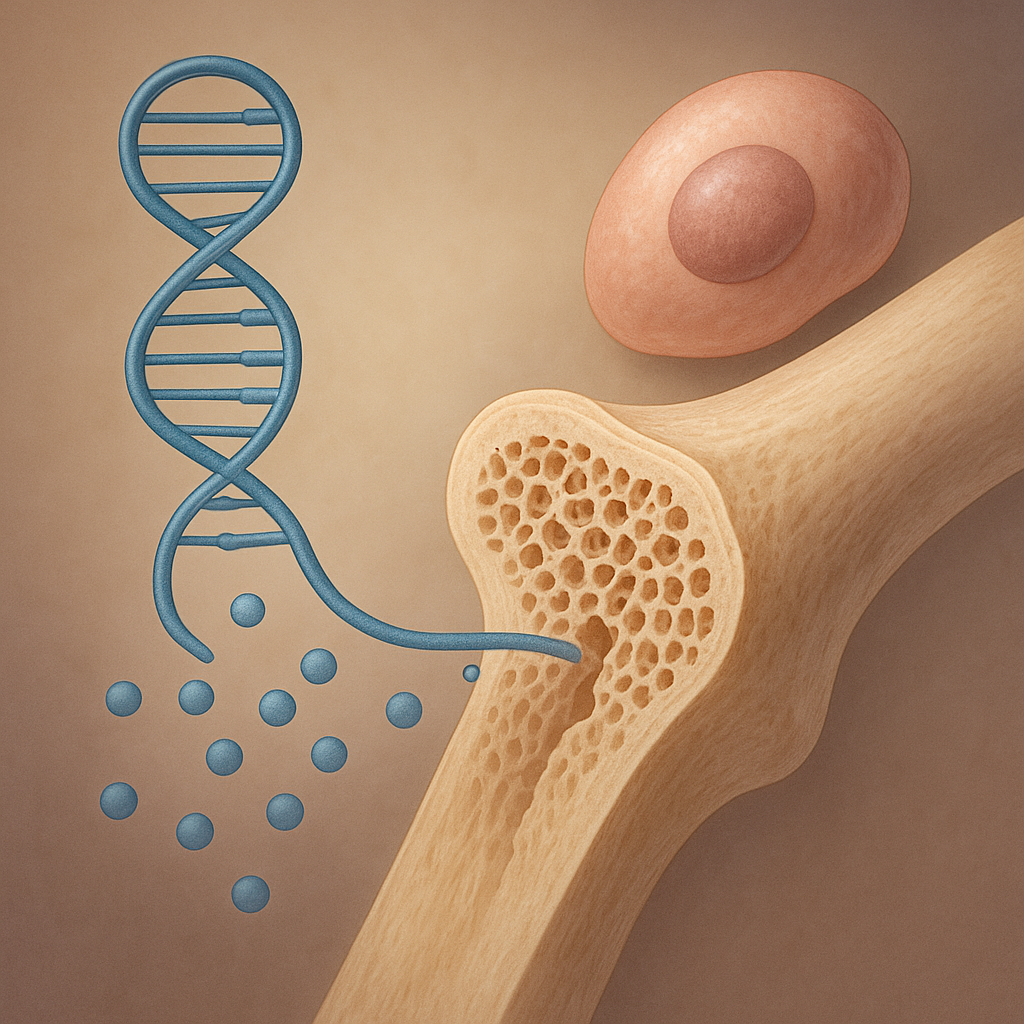
The intricate interplay between non‐coding RNAs and cellular pathways has opened new avenues in regenerative medicine. Among these regulators, microRNAs have emerged as powerful modulators of osteogenesis, influencing every stage of bone repair. Understanding how specific microRNA species orchestrate the fate of progenitor cells and interact with biomaterials could revolutionize strategies for treating complex skeletal defects. This article explores the molecular underpinnings of microRNA function, their roles in differentiation and proliferation, and the translational potential of miRNA‐based therapies in bone regeneration.
MicroRNA Biology and Mechanisms
MicroRNAs are small, ~22‐nucleotide, non‐coding RNAs that regulate gene expression post‐transcriptionally. They bind to complementary sequences in messenger RNA (mRNA), promoting mRNA degradation or translational repression. Each microRNA can target multiple mRNAs simultaneously, enabling broad control over complex signaling networks. In the context of bone, this gene regulation capacity allows fine‐tuning of pathways involved in cell survival, proliferation, and matrix mineralization.
Biogenesis and Function
Biogenesis begins in the nucleus, where primary transcripts (pri‐miRNAs) are processed by the Drosha‐DGCR8 complex into precursor miRNAs (pre‐miRNAs). These hairpin structures are then exported to the cytoplasm and cleaved by Dicer to yield mature duplexes. One strand is loaded onto the RNA‐induced silencing complex (RISC), guiding it to specific mRNA targets. The other strand is typically degraded. This multistep pathway underscores the precise control required for cellular homeostasis.
Key Signaling Pathways
Several pathways pivotal to bone metabolism are modulated by microRNAs:
- Wnt/β‐catenin: A master regulator of osteoblastogenesis; miR‐29 family members enhance signaling by targeting inhibitors such as DKK1.
- BMP/TGF‐β: Critical for early commitment; miR‐21 and miR‐140 adjust receptor and SMAD levels to calibrate responsiveness.
- Notch: Governs proliferation vs. differentiation; miR‐34a and miR‐30 target Notch ligands or receptors to shift the balance toward bone formation.
MicroRNAs in Osteogenic Differentiation
Osteogenic differentiation proceeds through sequential stages: commitment of mesenchymal stem cells (MSCs), extracellular matrix (ECM) deposition, and mineralization. MicroRNAs intervene at each stage, shaping lineage specification and matrix maturation.
Initiation of Commitment
During early commitment, factors like RUNX2 and osterix are induced. MicroRNAs such as miR‐218 and miR‐199a amplify this induction by silencing negative regulators of RUNX2. Conversely, miR‐125b acts as a brake by targeting osteogenic transcription factors, ensuring that only a subset of progenitors commits under appropriate cues.
Matrix Production and Mineralization
As osteoblasts lay down collagen type I and non‐collagenous proteins like osteopontin and bone sialoprotein, microRNAs modulate the expression of matrix enzymes. For example, miR‐29b enhances collagen synthesis by reducing expression of matrix metalloproteinases. In the mineralization phase, miR‐214 has been shown to inhibit osteoblast activity by targeting ATF4, whereas miR‐122 promotes mineral deposition by suppressing pro‐apoptotic genes.
Therapeutic Applications and Biomaterial Integration
Harnessing microRNAs for clinical use requires efficient delivery systems and compatibility with scaffold materials. Researchers have developed viral and non‐viral vectors, as well as biomaterial‐based platforms, to localize miRNA mimics or inhibitors at injury sites.
Delivery Strategies
- Viral Vectors: High transfection efficiency but risk of immunogenicity; lentiviral constructs carrying miR‐26a have boosted bone healing in animal models.
- Lipid Nanoparticles: Biodegradable carriers that encapsulate miRNA cargo; optimized for sustained release and minimal cytotoxicity.
- Hydrogel Scaffolds: Injectables loaded with miRNA‐bound nanoparticles, enabling gradual diffusion into surrounding tissues.
Composite Scaffolds and miRNA Functionalization
Bioceramics such as hydroxyapatite and bioactive glasses serve as osteoconductive backbones. When coupled with poly(lactic‐co‐glycolic acid) matrices, these composites can be functionalized with miRNA‐laden microspheres. This dual‐acting scaffold offers mechanical support while delivering therapeutic nucleic acids that modulate local cell behavior. Studies have demonstrated enhanced bone volume and improved vascularization when miR‐26a and miR‐196a are co‐delivered within such constructs.
Clinical Challenges and Future Directions
Translating miRNA‐based therapies from bench to bedside faces several hurdles. Off‐target effects, potential for immune activation, and precise dosing remain concerns. Standardizing manufacturing and ensuring long‐term safety are essential for regulatory approval.
Addressing Specificity and Safety
Advances in chemically modified oligonucleotides—such as locked nucleic acids (LNAs)—have improved binding affinity and resistance to nucleases. Combining these modifications with targeted delivery ligands (e.g., peptides recognizing MSC surface markers) can enhance specificity and reduce systemic exposure.
Emerging Technologies
- CRISPR‐Cas13 Systems: Programmable RNA editors that can selectively cleave or modify disease‐associated transcripts.
- Exosome‐Based Delivery: Harnessing natural vesicles secreted by MSCs to transport miRNAs, potentially reducing immunological risks.
- Smart Biomaterials: Responsive hydrogels that release miRNA payloads in response to local pH or enzymatic activity.
Integration of these platforms with 3D bioprinting and personalized medicine approaches could soon enable patient‐specific bone grafts that combine tailored scaffolds with precise miRNA regimens. Such innovations hold promise for addressing non‐union fractures, large segmental defects, and degenerative bone disorders.