








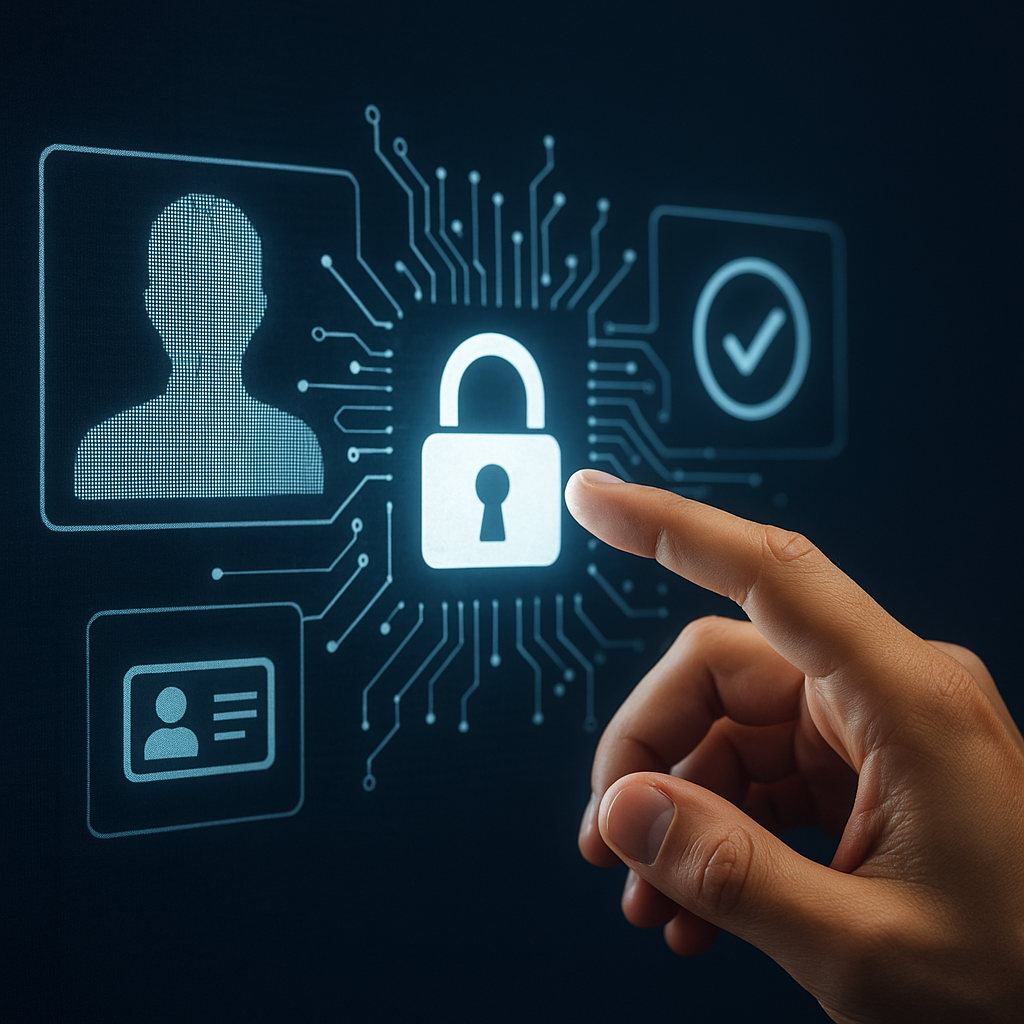
In a world where nearly every aspect of life has a digital reflection, our online identity has become just as important as our physical one. Brands, banks, health providers and even beauty platforms like alpbeauty.ch rely on secure user accounts, personalized profiles and trusted payment data. This creates both opportunity and risk: we gain convenience, yet expose ourselves to cyber threats, identity theft and data misuse. Digital identity and secure access solutions are therefore no longer optional; they form the backbone of modern trust on the internet. Understanding how identity is created, verified, managed and protected is crucial for individuals, companies and governments who want to enable seamless digital experiences without sacrificing security or privacy.
What is digital identity?
Digital identity is the collection of data that describes a person, device or organization in online environments. It goes far beyond a username and password. A full digital identity typically contains:
- Basic attributes such as name, email address, phone number and date of birth
- Authentication data like passwords, PINs, biometric templates or security tokens
- Behavioral patterns including login times, locations, devices and usage habits
- Verification status confirming that identity data has been checked by a trusted party
- Permissions and roles defining what the user is allowed to access or do
All these elements together form a kind of digital passport. Unlike a physical passport, this identity can be duplicated, stolen or altered at scale if it is not properly protected. That is why modern systems focus on building trust around digital identities through verification, continuous monitoring and strict access controls.
Key components of secure access
Secure access solutions are methods and technologies that ensure only legitimate users and devices can reach specific systems, data or services. The most important components include:
- Authentication – confirming that someone is who they claim to be
- Authorization – defining what an authenticated user is allowed to do
- Accounting – recording user activities for auditing and compliance
- Session management – controlling how long and under what conditions access remains valid
- Monitoring and analytics – detecting suspicious behavior in real time
Taken together, these mechanisms create a security layer that protects both customers and organizations from misuse of accounts, fraud and unauthorized data access.
From passwords to modern authentication
For decades, passwords were the dominant method of user authentication. However, they are inherently weak: humans choose simple passwords, reuse them across sites and often fall for phishing attacks. Attackers can also crack or steal large password databases. As a result, the industry is rapidly shifting toward more advanced authentication mechanisms.
- Multi factor authentication (MFA) combines at least two different factors: something you know, something you have, something you are. This makes it much harder for attackers to break in, even if they obtain one factor.
- Biometric methods use fingerprints, facial recognition or voice patterns. These are convenient for users and difficult to share or forget, although they must be stored and processed securely to protect privacy.
- Hardware tokens and security keys generate one time codes or cryptographic signatures. They are resistant to phishing because the key can verify the website before authenticating.
- Risk based authentication evaluates contextual information such as device, location, network and behavior. Access is made easier in low risk scenarios and stricter in high risk ones.
Modern secure access solutions combine these techniques to balance security and usability. The goal is to make strong protection feel almost invisible to legitimate users while blocking most fraudulent attempts.
Identity providers and single sign on
As users create hundreds of accounts across various services, managing separate credentials becomes unmanageable. Identity providers and single sign on systems address this challenge by centralizing authentication.
An identity provider is a service that manages user identities and authenticates them on behalf of other applications. When a user signs in through such a provider, they can access multiple connected services without entering a password each time. This is known as single sign on.
Benefits include:
- Simplified user experience with fewer logins and passwords to remember
- Centralized policy management for stronger security controls
- Easier compliance and auditing across different applications
- Faster onboarding and offboarding of employees and partners
However, relying on an identity provider also creates a central point of failure. That provider must therefore implement robust protection, redundancy and monitoring. If compromised, many dependent services could be at risk, making architectural design and security controls absolutely critical.
Zero trust access models
Traditional network security was based on a perimeter model: everything inside the corporate network was implicitly trusted, while everything outside was untrusted. This approach fails in a world of cloud services, remote work and mobile devices. A compromised laptop or stolen VPN credentials can allow attackers to move freely within the internal network.
Zero trust changes this mindset. Its core principle is: never trust, always verify. Under zero trust:
- Every user and device must be authenticated and authorized for each access request
- Access is granted with the principle of least privilege, limiting actions to what is strictly necessary
- Network segmentation and micro perimeters reduce the impact of breaches
- Continuous verification uses context signals and behavior analytics to adapt security decisions
Zero trust access architectures use secure gateways, identity aware proxies and strong identity management to enforce policies at every step. They provide more granular control and better resilience against internal and external threats.
Privacy and user control
Digital identity is not only about verifying who you are; it is also about deciding what others are allowed to know about you. Data protection regulations emphasize the importance of privacy, consent and transparency. Secure access solutions must therefore incorporate privacy by design.
Key principles include:
- Data minimization – collecting only the attributes needed for a specific purpose
- Purpose limitation – using identity data only for agreed objectives
- Transparency – clearly explaining what data is stored, how it is used and how long it is kept
- User control – allowing individuals to view, correct and delete their identity data where possible
- Secure storage – encrypting sensitive attributes and protecting encryption keys
Privacy friendly identity systems often rely on pseudonymous identifiers, selective disclosure of attributes and tokenization solutions that hide raw personal data. These mechanisms allow services to verify certain facts about a user, such as age or country, without revealing more information than necessary.
Decentralized and self sovereign identity
Recent years have seen a growing interest in decentralized and self sovereign identity models. Instead of storing identity attributes in many different databases controlled by various organizations, these models give individuals more control over their digital identity.
In a self sovereign identity system, users store verified credentials in their own digital wallets. When they need to prove something about themselves to a service, they can share only the required attributes in a cryptographically secure way. The issuer, such as a government or bank, signs the credential, and the verifier checks the signature without contacting the issuer every time.
Advantages of this approach include:
- Stronger user control over who sees which data
- Reduced reliance on centralized databases that can be hacked
- Better interoperability across borders and platforms
- More privacy through selective disclosure and zero knowledge techniques
Decentralized systems are still evolving and face challenges in usability, governance and global adoption. Nonetheless, they offer a promising direction for rebalancing power between individuals and large platforms in the digital identity ecosystem.
Secure access in everyday services
Secure access solutions feel abstract, but they operate behind almost every online interaction. Examples include:
- Signing into an e commerce account to manage orders, payments and loyalty points
- Accessing online banking, where strong customer authentication is mandatory
- Using health portals to view medical records and communicate with doctors
- Opening business collaboration tools to share documents and hold meetings
- Managing smart home devices remotely via mobile applications
In each case, a combination of identity verification, access control, encryption and monitoring works together to protect both users and service providers. A well designed solution remains largely invisible, surfacing only when additional steps, such as confirming a new device, are required to maintain trust.
Threats to digital identity
Attackers target digital identities because they are a gateway to financial assets, personal data and corporate secrets. Common threats include:
- Phishing – tricking users into revealing their credentials on fake websites
- Credential stuffing – using stolen username and password pairs from one breach to access other accounts
- Account takeover – hijacking user accounts to perform fraud or data theft
- Session hijacking – stealing active sessions via malware or insecure networks
- Social engineering – manipulating people into bypassing security procedures
- Malware and keyloggers – capturing authentication data directly from devices
Because human behavior cannot be perfectly controlled, secure access solutions must assume that some credentials will be stolen and design layered defenses to detect and mitigate such events. This defense in depth approach significantly reduces the likelihood of a successful large scale compromise.
Best practices for organizations
Companies that manage user identities or provide online services should follow a set of best practices to ensure robust protection:
- Adopt strong, phishing resistant authentication mechanisms wherever possible
- Implement centralized identity and access management with clear policies
- Use encryption in transit and at rest for all sensitive data
- Regularly review user roles, privileges and dormant accounts
- Monitor access logs and configure alerts for unusual behavior
- Educate users and employees about common attacks and safe practices
- Test incident response plans for identity related breaches
Organizations should also design user experiences that encourage secure behavior by default. For example, making secure options like multi factor authentication the standard choice, instead of an optional extra, leads to better overall security with minimal friction.
Best practices for individuals
Individuals also play a critical role in protecting their digital identity. Simple habits can significantly lower the risk of account compromise:
- Enable multi factor authentication on all important accounts, especially email and financial services
- Use a password manager to generate and store unique, complex passwords
- Be skeptical of unsolicited messages asking for credentials or personal data
- Verify website addresses carefully before entering login information
- Keep devices, browsers and applications updated to patch known vulnerabilities
- Review account activity regularly and report any suspicious events
By combining these personal practices with the protections implemented by service providers, users can build a more resilient defense around their digital lives.
The future of digital identity and secure access
The landscape of digital identity is changing rapidly. Several trends are shaping the next generation of secure access solutions:
- Growing adoption of passwordless authentication, relying on biometrics and cryptographic keys
- Increased use of machine learning to detect anomalies and adapt access decisions
- Convergence of physical and digital identity, for example using mobile identities for both online and offline verification
- Expansion of interoperability standards to allow seamless cross platform identities
- Rising importance of ethics, transparency and fairness in identity systems
As digital interactions continue to expand into new domains, from smart cities to connected cars, secure identity and access management will remain a foundational requirement. Success will depend on balancing convenience, privacy, resilience and regulatory obligations while maintaining user trust.
Conclusion
Digital identity and secure access solutions form the invisible infrastructure that enables modern online life. They allow us to log in, pay, collaborate and share information across platforms with confidence. At the same time, they must defend against constantly evolving threats, protect sensitive data and respect individual rights. Achieving this balance requires ongoing innovation in technology, careful attention to privacy and strong cooperation between organizations, regulators and users. By investing in robust identity systems today, we can build a more secure and trustworthy digital ecosystem for the future.